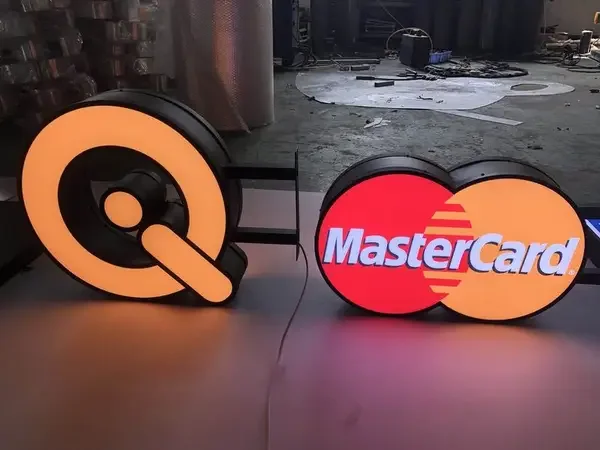
If a lightbox graphic may change, discuss face replacement before ordering the cabinet. Identify which element needs to be replaceable, how it will be reached and who will carry out the work. A sign with a removable-looking border is not automatically a suitable changeable-graphic system.
Describe the expected change
Explain whether the business expects occasional rebranding, different messages or replacement after damage. Those are different use cases. State who will handle the sign, where it is mounted and what access restrictions the local team has identified. Do not promise a tool-free or quick change unless the actual design has been reviewed for that requirement.
Connect the request to the lightbox product brief. If two faces are involved, identify the change requirement on each side. The single-sided and double-sided comparison helps describe the viewing arrangement separately from service access.
Agree the face and enclosure as one arrangement
The face material, graphic process, edge treatment and retaining arrangement need to be specified together. A new face cut to an outside dimension may still be unsuitable if the original product details are unknown. Request the relevant drawing and material information rather than trying to establish compatibility from a front photograph.
| Topic | Question before ordering |
|---|---|
| Changeable element | Is the graphic, face or complete assembly replaced? |
| Access | Which side opens and what space does that require? |
| Retention | What reviewed arrangement keeps the face in place? |
| Identification | How will a future replacement be referenced? |
| Local work | Who handles access, isolation and reinstatement? |
Light-diffusing material information can help frame the discussion, but it does not establish interchangeability between cabinets. Record the actual face material proposed for the order, together with any sample or lit-appearance review.

Put future replacement information in the handover
Ask which drawing references, dimensions and item codes should be kept for later orders. Record the approved graphic issue separately from the cabinet identity. If the graphic changes, the receiving team should be able to tell whether it is replacing the same physical component or requesting a different construction.
| Handover record | Purpose |
|---|---|
| Cabinet reference | Identify the original supplied assembly |
| Face specification | Define the actual replaceable component |
| Artwork issue | Identify the current visible graphic |
| Access notes | Preserve the reviewed local working assumptions |
The quotation should identify whether spare faces or replacement information are included. Do not assume that an extra printed graphic includes a new face, retaining parts or local work. Keep those lines visible in the lightbox quote comparison.
Can the sign remain in place during a change?
That depends on its actual opening arrangement, location and the local work involved. Ask the responsible team to review the procedure and access. This guide identifies procurement questions, not a method for opening an installed illuminated sign or working on live electrical parts.
What should be included in the enquiry?
State the intended graphic changes, viewing format, dimensions, installation position, quantities and destination. For an existing sign, include its available documentation and photographs. Request a defined lightbox offer that identifies the replacement scope instead of relying on the general phrase changeable face.
References & further reading
External manufacturer or carrier guidance supports the terminology and general considerations discussed here. Their product specifications and policies are specific to their own services.
Prepared as a purchasing discussion aid. Confirm the specification, installation responsibilities and applicable requirements for your project.