
Choose a single-sided or double-sided lightbox by the directions from which people need to see it. Start with the approach to the premises and the proposed mounting position. Then review the graphic on each face, the enclosure and the service access. A second face is a design and manufacturing decision, not simply another printed copy.
Trace the approach to the sign
A wall-facing sign may primarily serve people facing the building. A projecting sign can present different faces to people approaching from opposite directions. Show both views in your brief, including nearby obstructions. The relevant choice depends on the actual location, so do not select the format only because it looks attractive in a close-up photograph.
Use a plan or two labelled photographs to identify the views. Describe where the sign should communicate the business name and where it should help identify the entrance. For a wider frontage project, connect the cabinet to the storefront sign brief rather than approving it in isolation.
Specify the faces separately
Confirm whether the two faces share a design, use different artwork or need a particular orientation. Mark top, front and approach direction on the review drawing. A mirrored graphic file can produce an unintended result if the intended reading direction is not clear.
| Topic | Single-facing discussion | Two-facing discussion |
|---|---|---|
| Viewing | Main approach to the face | Both approaches and obstructions |
| Graphics | Current face artwork | Artwork and orientation for each face |
| Enclosure | Relationship to the wall | Projection and visible enclosure surfaces |
| Access | How the face is reached | Access to each face and internal parts |
Review the actual face material, graphic and illumination as a system. Material makers offer light-diffusing grades for illuminated applications, but a material product page does not establish the performance of a finished cabinet. Confirm the material proposed for your particular order without assuming a named supplier's grade is included.
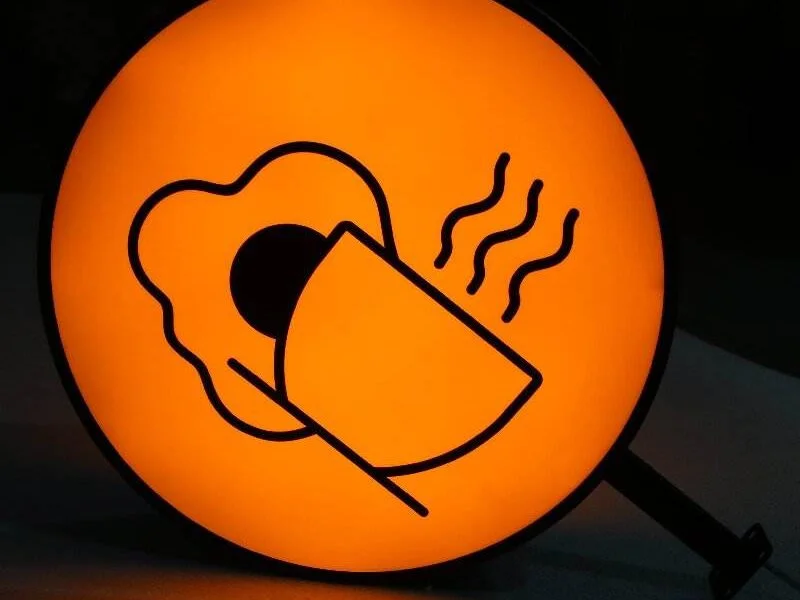
Compare the complete cabinet scope
Ask which faces, enclosure parts, lighting components and supporting pieces are included. Identify the mounting interface and who reviews it locally. The visible sign format alone cannot establish a suitable bracket, attachment or building support. Any required electrical connection also needs a defined responsibility.
| Quotation item | Confirmation to request |
|---|---|
| Face count | Number of supplied graphic faces |
| Artwork | File issue and orientation for each side |
| Maintenance | Opening arrangement and access assumptions |
| Delivery | Packed dimensions, destination and included components |
The lightbox quotation checklist helps keep those items comparable. Ask for any alternative cabinet arrangement to be shown, not merely described by a lower total.
Should both faces have the same appearance?
They may share a design, but the two viewing environments can differ. One side may face daylight or a different surrounding surface. Define the intended review conditions and any appearance-sensitive approval. Do not expect a screen preview alone to demonstrate the final lit result from every approach.
What information starts the quotation?
Provide the proposed location, viewing directions, dimensions, graphic files for each face, quantity and destination. State whether later graphic replacement is required. Explore the custom lightbox sign range and request a defined offer with those decisions attached.
References & further reading
External manufacturer or carrier guidance supports the terminology and general considerations discussed here. Their product specifications and policies are specific to their own services.
Prepared as a purchasing discussion aid. Confirm the specification, installation responsibilities and applicable requirements for your project.