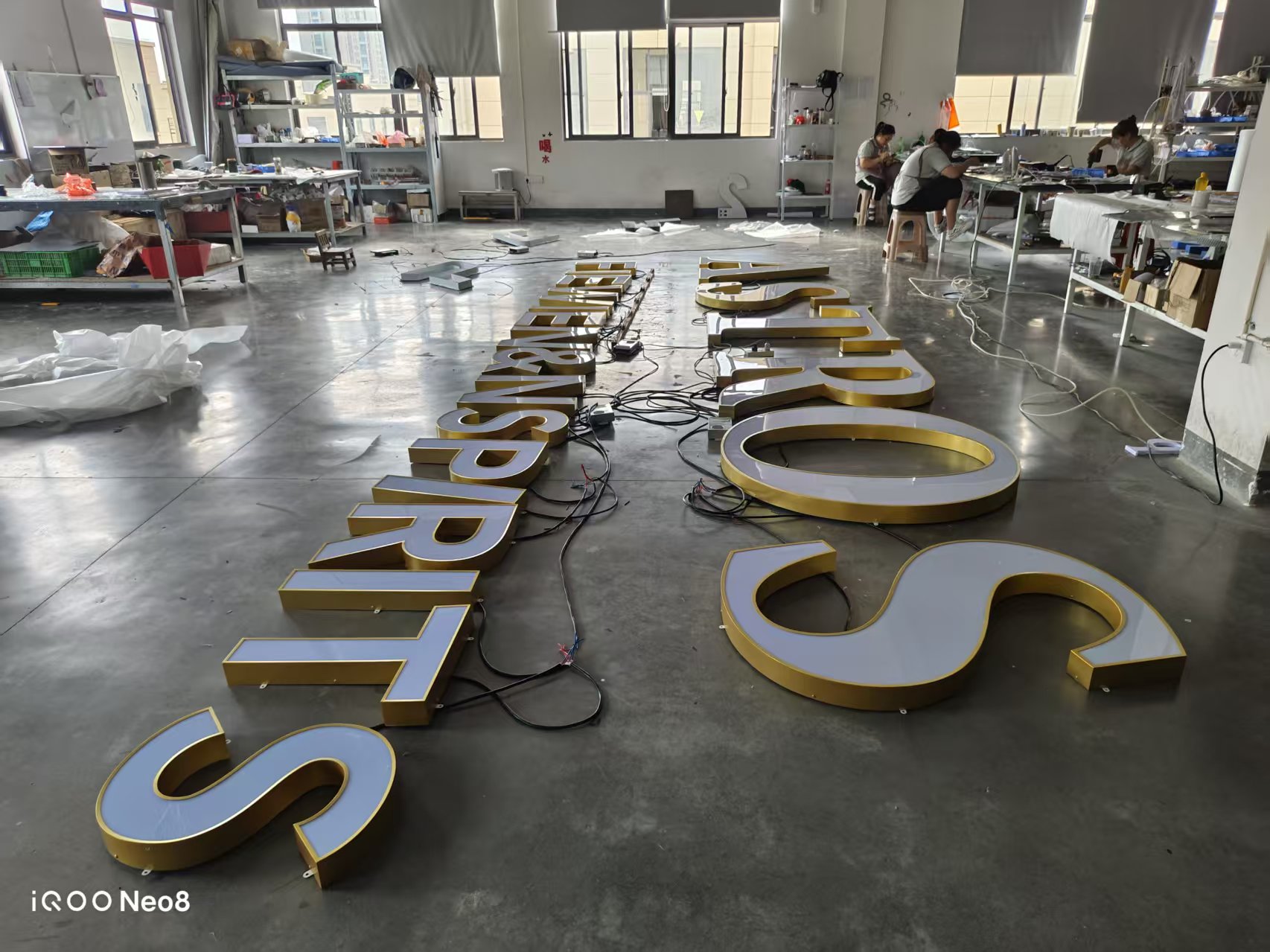
A wholesale quotation is easier to evaluate when the buyer can trace every priced item back to the brief. Instead of asking for one price against a folder of images, give each design an item reference and record the open decisions. This is a procurement checklist, not a price list or a promise of a standard lead time.
Make quantities unambiguous
State whether the quantity means individual letters, complete words, logo sets or full storefront packages. For example, three sets of a six-letter name is clearer than quantity three beside an unlabelled drawing. List repeated designs and site-specific variations separately so a supplier does not have to infer them.
Keep a common quotation basis
Share the same dimensioned artwork revision, finish reference and lighting description with each supplier. Include the delivery country and postcode, and state whether a local installer is already involved. Flag missing dimensions as open questions. Do not let an early estimate silently become the production instruction when those details change.
Ask what the line price includes
Request an itemised description of the letters and any backing, mounting accessories, layout information or electrical components proposed. Ask which parts are optional and which are excluded. The exact components must be agreed for the design; there is no universal package that every channel letter quote includes.
Separate production and delivery
Ask for the production scope, packing proposal and transport arrangement to be identifiable. Record the currency, quotation validity and assumptions. Clarify who handles local taxes, import formalities, unloading and installation. An apparent price difference can come from different responsibilities rather than a different manufacturing price.
Close the loop before approval
Return a list of clarifications against the original item references. When a change affects the specification, request an updated quotation or written confirmation. Keep the selected quotation, drawing revision and approval record together. For an initial AOCHUANGSIGN enquiry, use the quote form with a concise project summary and reference images; production artwork and remaining details can then be reviewed with the team.
Build a like-for-like comparison sheet
Place the written specification beside the price. The purpose is to reveal scope differences before they become order changes, not to assume that every supplier uses the same package.
| Comparison line | Detail to obtain | Why a price may differ |
|---|---|---|
| Item and quantity | Complete sets, individual letters and logos | Different interpretations of one set |
| Artwork | Revision, dimensions and any proposed changes | Suppliers pricing different issues |
| Construction | Face, body, depth and lighting direction | A different visible or assembled design |
| Finish | Defined appearance and approval reference | Different base materials or surface scope |
| Accessories | Included mounting, layout and electrical items | Components included in one offer only |
| Packing | Proposed grouping and protection | Different assembly or receiving arrangements |
| Delivery | Destination, service basis and responsibilities | Different transport and destination scope |
| Timing | Assumptions and outstanding approvals | Different starting points for the schedule |
Use the channel letter product brief to organise construction questions. The lighting comparison helps make front, rear and combined effects explicit. For a mixed order, separate metal letters and lightboxes into their own referenced lines.
An illustrative RFQ you can adapt
This is a fictional planning example, not a quoted order or a statement of production limits. A sign business needs six complete sets of a reception name, with a proposed layout 900 mm wide. Two locations have different wall finishes. The lighting direction is undecided and a metallic appearance sample is needed.
Give the shared artwork an item reference, identify the two mounting variants, and state that the lighting and finish need review. Request separate descriptions of the proposed alternatives rather than a single unexplained total. Include the delivery postcode and installer questions. If the supplier changes the drawing to resolve a manufacturing detail, compare the revised scope against the same RFQ before approval.
What changes a custom-letter price?
Ask how the actual design affects the proposal: overall size and stroke detail, construction, material and finish, lighting arrangement, order quantities, included accessories and packing or transport requirements. These are comparison questions, not a pricing formula. A per-letter headline price cannot describe every custom logo or installation interface.
Keep unknowns out of the approval column
Mark each requirement confirmed, proposed or awaiting a decision. Give an owner to the open questions. Before ordering, check that the selected quotation, artwork, finish reference and scope exclusions agree. Use the sample review record if appearance is being approved by a sample.
Does the cheapest total necessarily cover the same order?
Only the written scope can establish that. Check quantities, accessories, packing, delivery terms and exclusions before comparing totals. Ask for unclear lines to be clarified in writing rather than treating a photograph as evidence of what is included.
Can I request an estimate before all details are settled?
An initial discussion can identify what information is still needed. Label undecided details and ask which assumptions underpin any estimate. The artwork preparation guide helps assemble a useful first brief. Keep the later production approval separate from that early estimate.
A final five-point check
- Every priced line connects to a named item and drawing revision. - Quantities distinguish complete sets from individual components. - Construction, finish and lighting alternatives are visible. - Delivery and local installation responsibilities are written down. - Outstanding decisions are resolved before the order is approved.
The multi-location schedule example is useful for repeated designs. Plan the handover with the packing and receiving checklist, then send an enquiry with the item schedule and open questions.
References & further reading
External manufacturer or carrier guidance supports the terminology and general considerations discussed here. Their product specifications and policies are specific to their own services.
Prepared as a purchasing discussion aid. Confirm the specification, installation responsibilities and applicable requirements for your project.