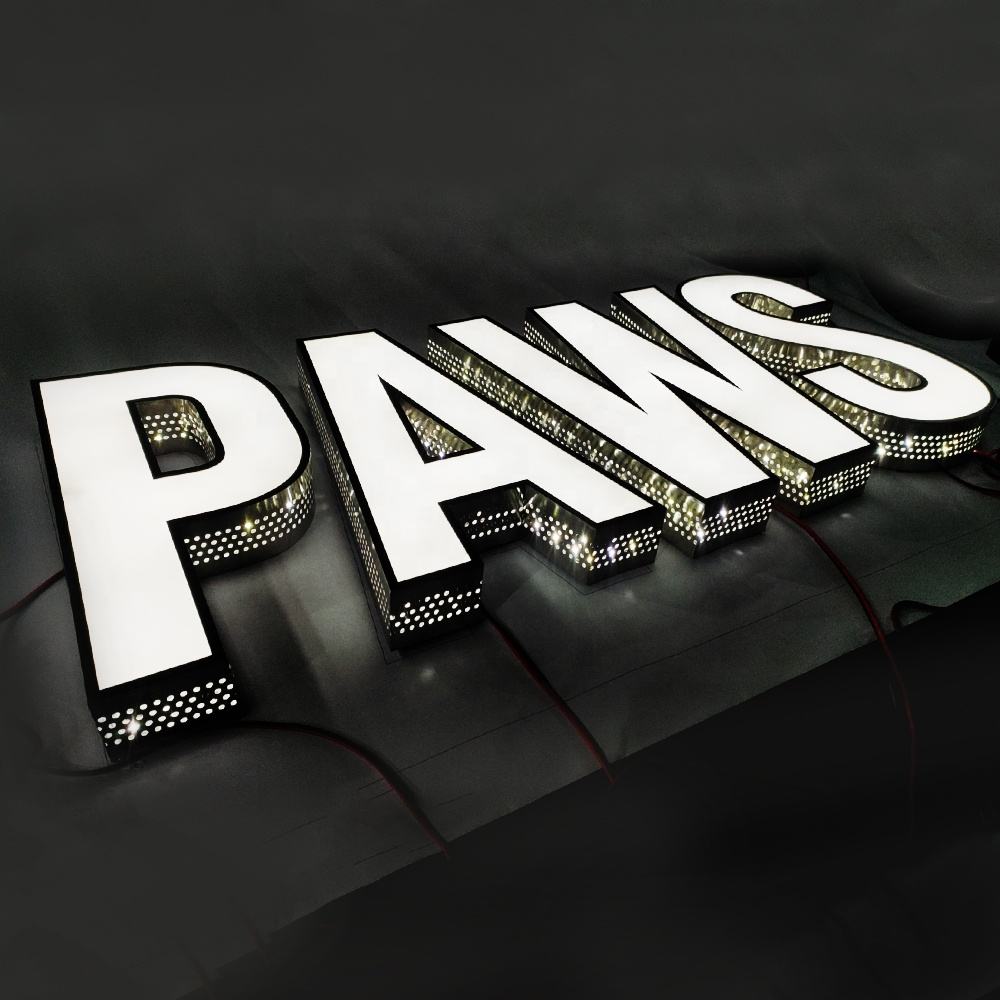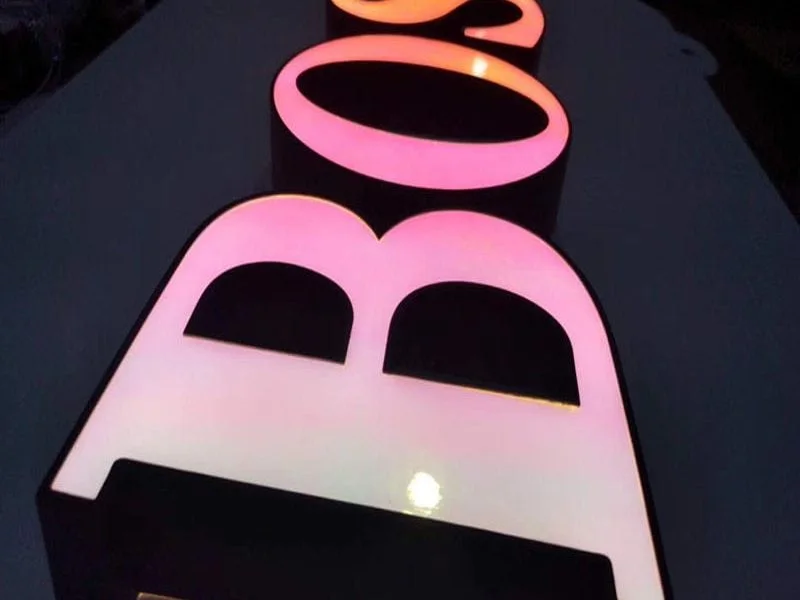
Acrylic illuminated lettering describes a material-led design direction rather than one universal lighting effect. State whether the face, sides, rear or a combination should be visible when lit, and describe the intended appearance when the sign is off.
Separate material from lighting direction
Acrylic in a description does not by itself explain which surfaces transmit light or what the supporting construction is. Mark the visible light areas on a design reference. Ask the proposed quotation to distinguish the face/body arrangement and any backing or metal components.
Show artwork detail at the intended size
Give the complete wording or logo, overall dimensions and units. Identify small openings, narrow strokes and joins for manufacturing review. If a layout adjustment is proposed, keep the revised outline with the approval record so the visible design remains clear.
Review faces, edges and mounting together
Describe colour and appearance preferences without treating a screen image as an exact physical specification. Include the mounting surface, cable route and any visibility constraints around fixings or backing. These interfaces should be considered while the design can still be adjusted.
Request the proposed construction
Ask which material, assembled components, lighting arrangement and mounting information are included. Record sample approval requirements if the appearance is important. Application suitability and electrical requirements must be confirmed for the actual installation.
Place the option in the complete sign project
Review this lettering beside the other signs in the same space. Keep the sign location, viewing context and approved brand appearance with the artwork. For an entrance or frontage, use the storefront signage brief; for interior identity, compare the lobby and office signage range. List each sign type and quantity separately so the project quotation can define manufacturing, packing and installation responsibilities.