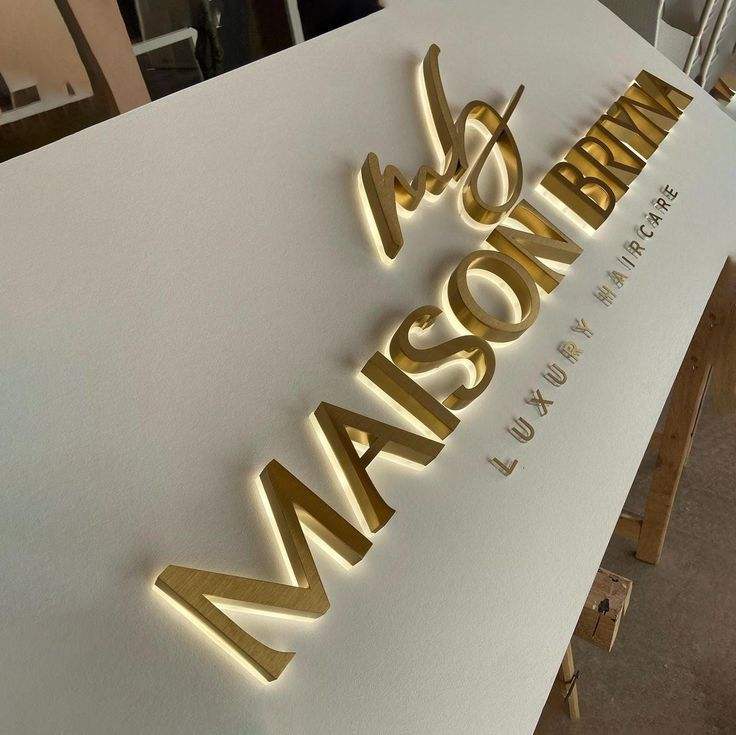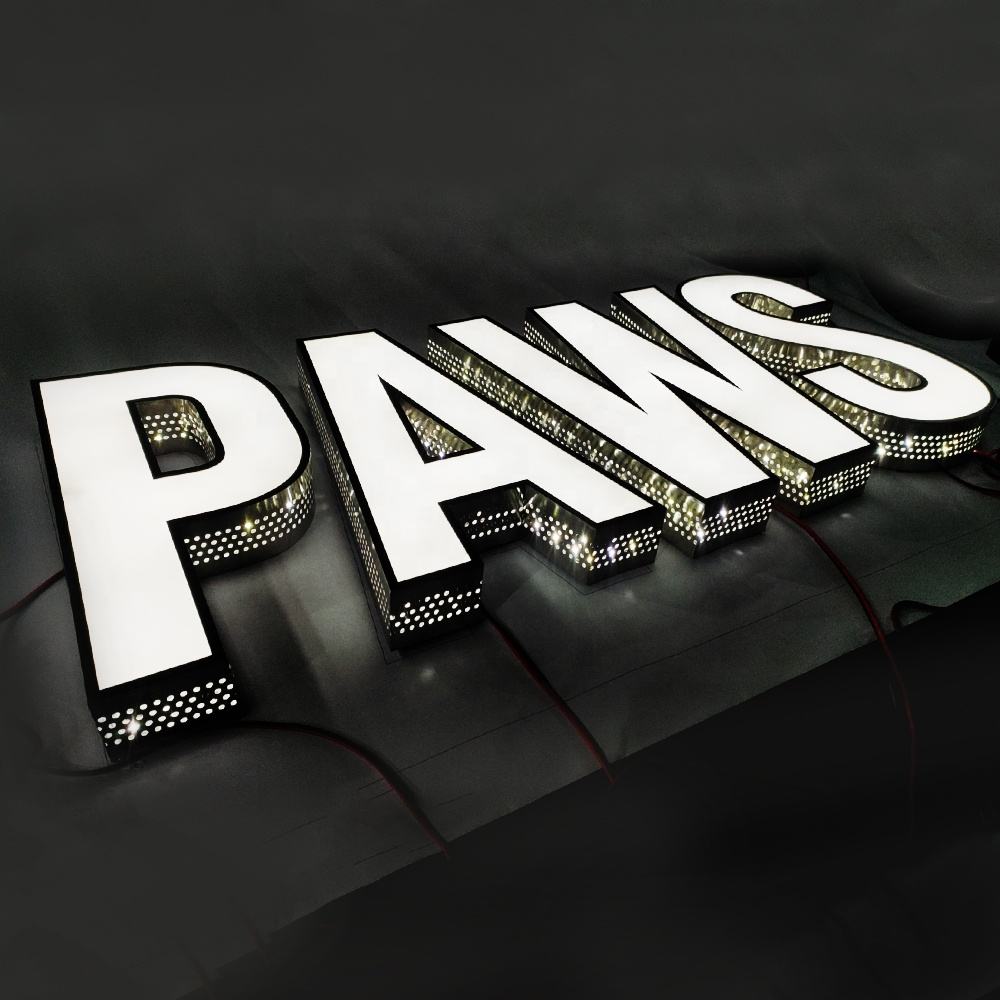
A combined-lighting brief calls for light at the face and behind the letter. Treat those two intentions as separate design decisions within one sign rather than assuming that a front-lit reference automatically includes a halo.
Mark the two effects on the design
Identify which faces should illuminate and where a rear effect is wanted. Describe the colour intention for each. If different elements in a logo need different treatment, use item references or marked zones so the quotation can address them consistently.
Review the body as a complete assembly
Discuss the visible face, side returns, body depth and rear relationship together. Ask the manufacturer to show the proposed arrangement against the artwork. Fine outlines or tight internal spaces should be brought into the design review rather than treated as details that can be decided after approval.
Keep controls and connections explicit
State any requested operating or control behaviour for confirmation. Do not assume that independent switching, dimming or a particular component package is included. Identify the proposed cable route, supporting-component location and maintenance access with the responsible local team.
Approve the result in context
Use the intended wall and viewing conditions when discussing a sample or visual reference. Record which features have been reviewed and which still need confirmation. The agreed quotation, drawing and approval record should describe the same two-effect scope.
Place the option in the complete sign project
Review this lettering beside the other signs in the same space. Keep the sign location, viewing context and approved brand appearance with the artwork. For an entrance or frontage, use the storefront signage brief; for interior identity, compare the lobby and office signage range. List each sign type and quantity separately so the project quotation can define manufacturing, packing and installation responsibilities.