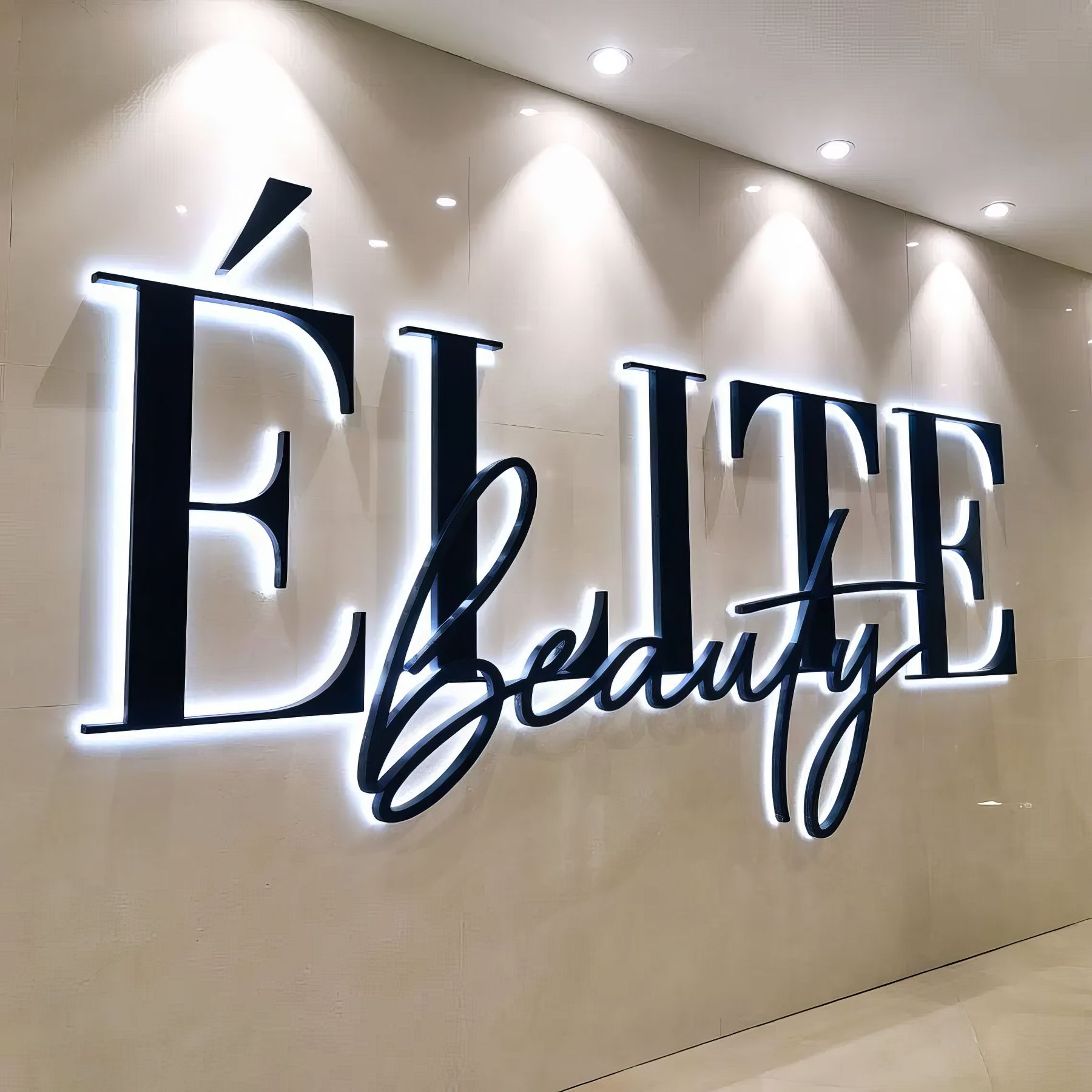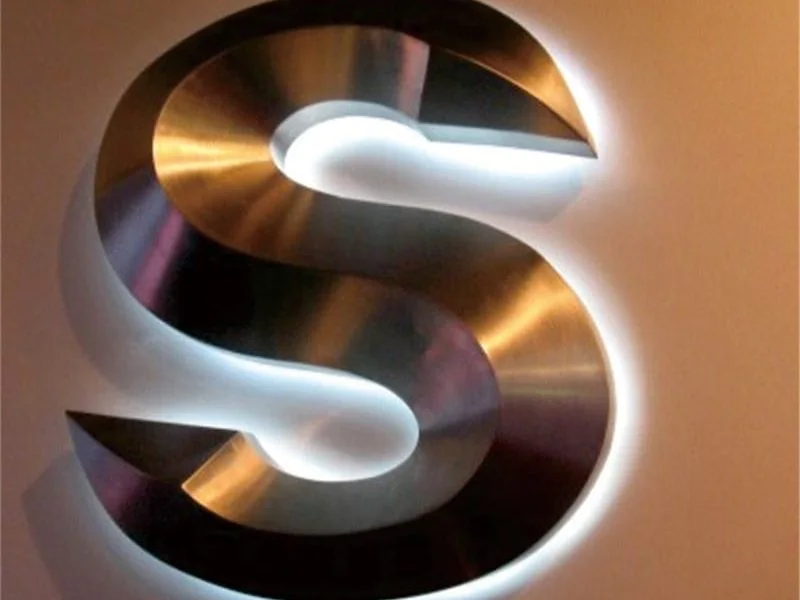
Halo-lit lettering directs light behind the letter so the mounting surface becomes part of the appearance. Reverse-lit and back-lit are also used for this effect. Include a reference and describe the intended result if the terminology could be interpreted differently.
The wall is part of the brief
Show the actual wall colour, texture, joints and the proposed lettering position. A rear-light effect photographed on one surface does not establish the same appearance on another. Include a wider site view as well as the surface detail so surrounding light and obstructions can be discussed.
Define body depth and projection
A side view should distinguish the letter body from its relationship to the wall. Ask the manufacturer and local installer to review the proposed fixing, cable access and stand-off arrangement together. A distance copied from an unrelated photograph is not an installation instruction.
Review visible metal appearance independently
Record the required material and surface reference, including faces and returns where they are visible. A gold or dark appearance does not identify the underlying metal or coating. If appearance is sensitive, agree a sample or another review method with its limitations recorded.
Agree what is being supplied
Ask the quotation to identify the letter bodies, supporting components, proposed lighting and any mounting information included. Confirm which site and electrical questions are handled locally. Keep the approved wall context and artwork against the same item reference.
Place the option in the complete sign project
Review this lettering beside the other signs in the same space. Keep the sign location, viewing context and approved brand appearance with the artwork. For an entrance or frontage, use the storefront signage brief; for interior identity, compare the lobby and office signage range. List each sign type and quantity separately so the project quotation can define manufacturing, packing and installation responsibilities.