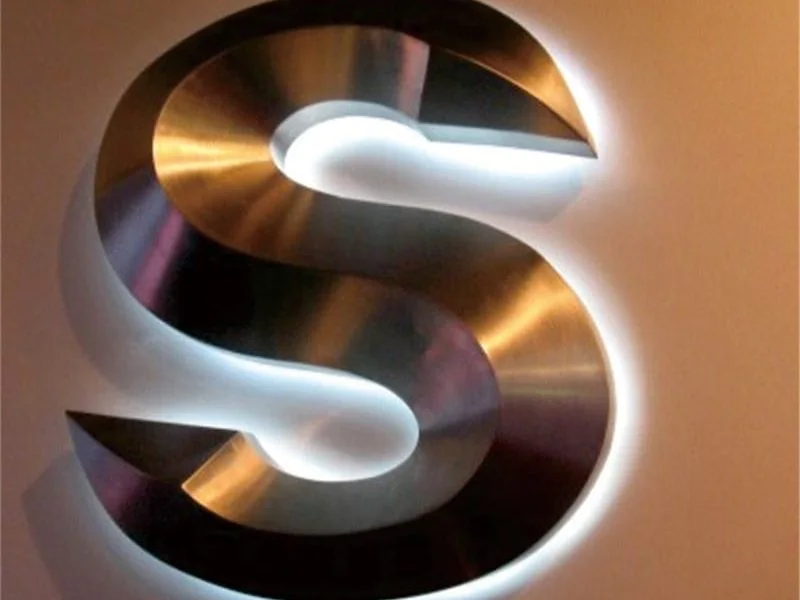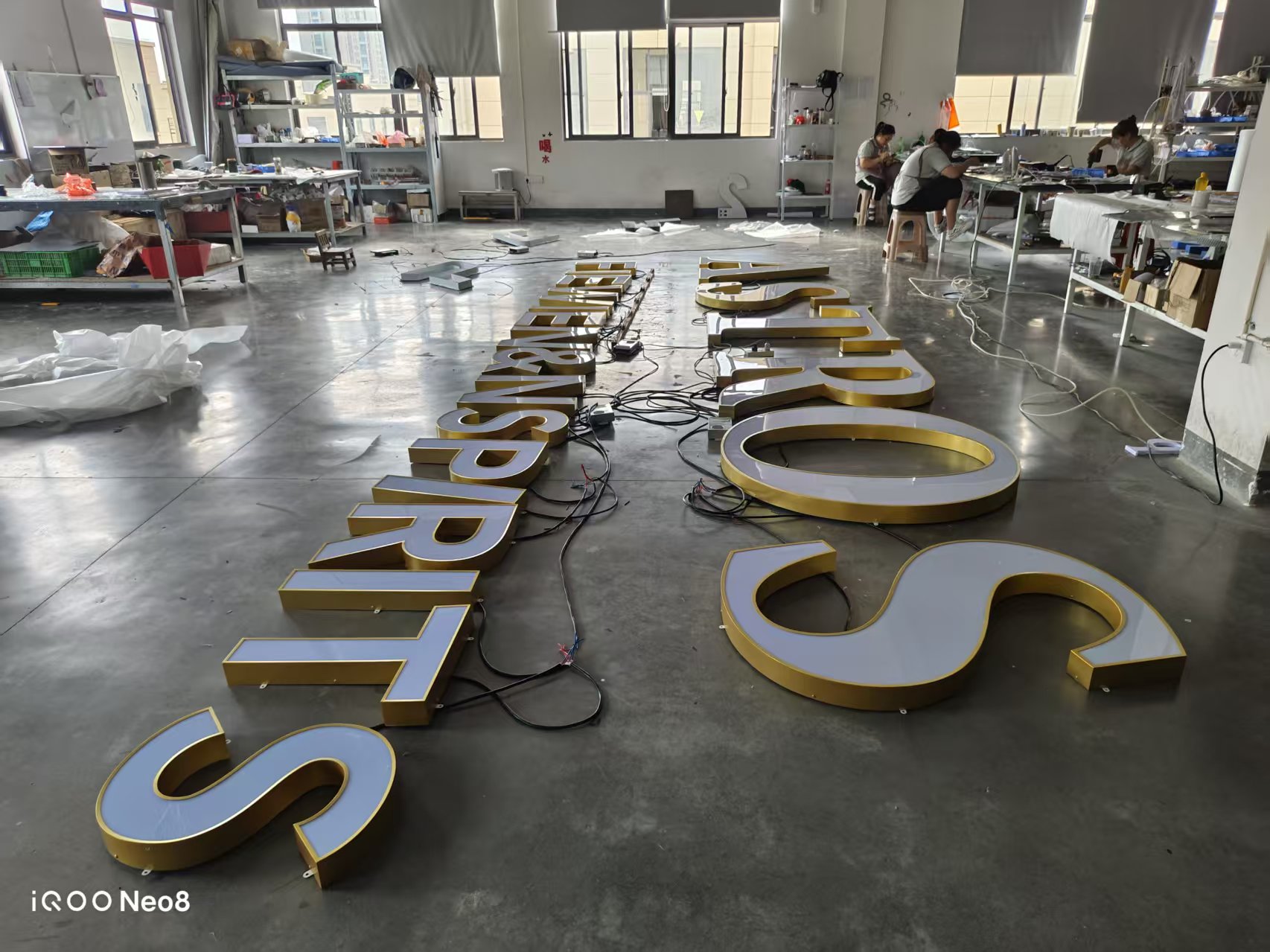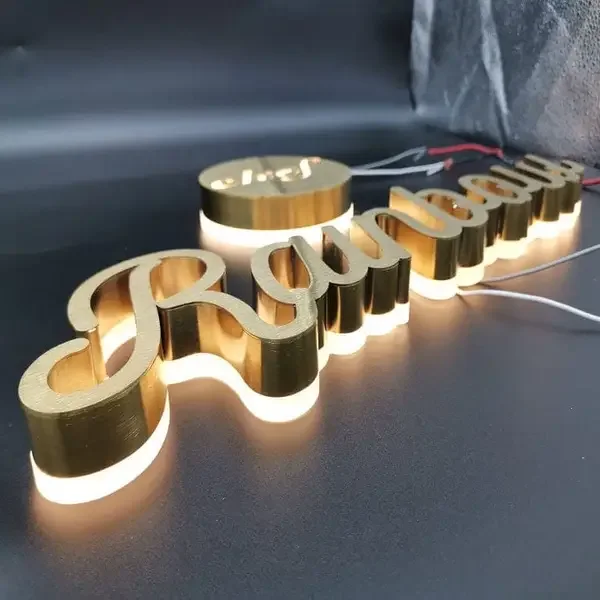
Built-up or fabricated metal lettering has an assembled body with a face and side returns. Its visible depth is a different decision from the metal thickness. Identify both where they are relevant to the project, rather than asking a perspective photograph to serve as the entire construction description.
Label the side view
Show the intended body depth and any wall relationship on a labelled drawing. Discuss visible returns, edge preferences and joins as part of the appearance review. If some dimensions are not yet decided, keep them as questions for the manufacturing review.
Separate metal appearance and illumination
An assembled metal body may be discussed with or without illumination. Identify the required effect explicitly. A gold appearance does not define the base material or surface process, so connect the face and return finish to an actual specification or approval reference.
Resolve the interfaces before release
Include the mounting surface, fixing constraints and access behind the letters. For an illuminated design, identify cable routing and supporting-component access. Agree which information the manufacturer supplies and which decisions are reviewed by the local installer.
Use an approval that covers the whole body
Review the visible front and side appearance, construction description and installation interface against the same artwork issue. If the supplier proposes another body arrangement, ask for the differences to be identified before it replaces the originally discussed option.
Place the option in the complete sign project
Review this lettering beside the other signs in the same space. Keep the sign location, viewing context and approved brand appearance with the artwork. For an entrance or frontage, use the storefront signage brief; for interior identity, compare the lobby and office signage range. List each sign type and quantity separately so the project quotation can define manufacturing, packing and installation responsibilities.